

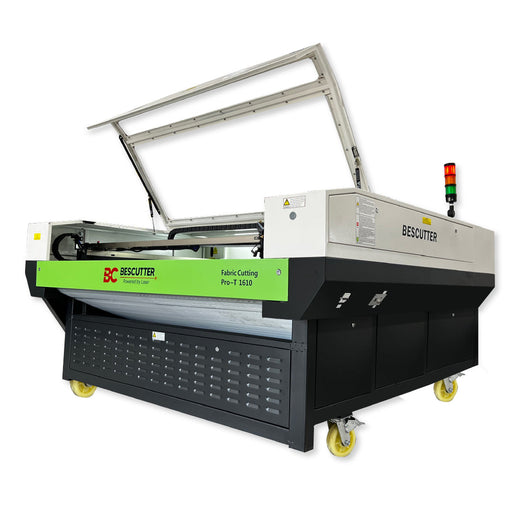
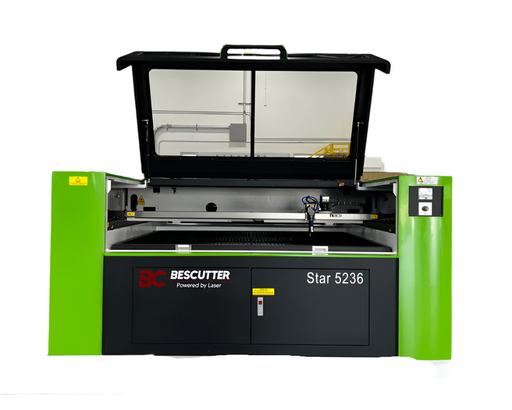
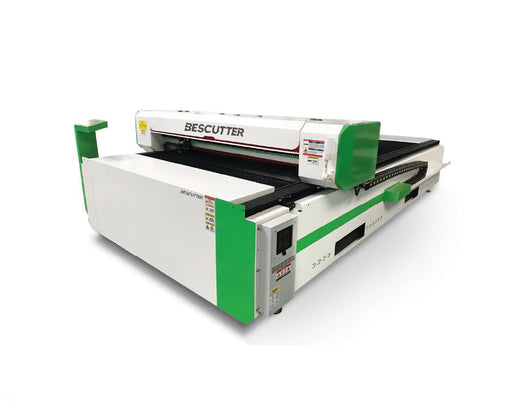

In the fast-paced world of modern manufacturing, the CO2 laser cutting machine has become synonymous with efficiency and versatility. It's the preferred technology for processing a wide range of non-metallic materials, offering precision that conventional cutting tools simply can't match. Whether you're researching how to choose your first CO2 laser machine or looking for the best power for cutting 10mm acrylic , this comprehensive guide will provide you with the knowledge you need to make informed decisions and maximize your investment.
How does a CO2 laser machine work? The science behind laser cutting
This technology operates based on well-defined optical and physical principles, culminating in a highly concentrated beam of light that performs clean, contactless cuts and engravings. This process is key to understanding why cut quality depends on more than just power.
The generation of the infrared beam and the heart of the tube
The heart of the machine is the laser tube , which contains a gaseous mixture of carbon dioxide (CO2), nitrogen (N2), and helium (He). When a high-voltage electrical discharge (supplied by the power supply ) is applied, the CO2 gas is excited. This produces photons in the infrared range, at a wavelength of 10.6 µm. This wavelength is readily absorbed by most organic (non-metallic) materials.
The role of the catalyst and lifespan: why price matters
High-end laser tubes (such as RECI or EFR ) incorporate a catalyst in their design. This chemical element is crucial, as it helps recombine the CO2 molecules that break down during operation. By keeping the gas mixture stable and pure, the catalyst ensures the promised thousands of hours of lifespan (up to 10,000 hours in premium models). Unlike cheaper tubes without a catalyst, which suffer rapid degradation in power and lifespan, investing in a brand-name tube ensures long-term consistency and durability.
Learn about the parts: tube, optics, and essential components for precision
The quality of the cut is a direct result of the synergy between the components, with alignment and cooling being just as crucial as power itself. Investing in high-quality components is essential for sustained performance.
Optical system: the eyes of precision and its maintenance
The optical system is the critical path along which the beam travels from the tube to the material. Power loss due to a dirty or misaligned optical system can be up to 40%. It consists of:
- Three reflecting mirrors (usually made of molybdenum or silicon), located at the corners, direct the beam along the X and Y axes. The alignment of these mirrors must be checked periodically.
- A Focusing Lens (usually made of ZnSe, Zinc Selenide), located in the head, which is the final point where the beam is concentrated.
Focus and cutting quality: the perfect fit
The focusing lens is responsible for concentrating the beam onto a tiny focal point, often less than 0.1 mm in diameter. The choice of this lens's focal length (e.g., 6 mm for thin cuts or 7 mm for thicker cuts) determines the maximum cutting thickness the machine can achieve. Incorrect focusing leads to beveled, incomplete cuts, or rough, burnt edges. To obtain the "sweet spot" for the cut, the material must be positioned precisely at the lens's focal point.
The chiller: guardian of the tube's power and durability
The chiller is perhaps the most underestimated component, yet the most vital to the laser tube's lifespan. Excessive heat not only temporarily reduces power output but also irreversibly degrades the laser tube.
- Chiller CW-3000: This is a passive thermoelectric heatsink without a compressor. It is suitable only for very low-power lasers (40W-60W) or for equipment that engraves intermittently, but not for continuous cutting.
- Chiller CW-5000 or higher: Uses refrigerant and a compressor (like an air conditioner) to actively and consistently maintain the water temperature (generally between 20°C and 26°C). This upgrade is mandatory for 80W and higher tubes and is the only way to ensure maximum durability, power stability, and compliance with the tube manufacturer's warranty.
Types of CO2 laser machines and their differences in application
The choice of CO2 Laser Cutting Machine is defined by the type of work you will be doing: do you need marking speed or the ability to cut thick material?
- Flatbed machines: These are the most common and versatile option. They move the cutting head along the X and Y axes (gantry style). They are ideal for cutting full sheets of material (1200 x 900 mm or larger) and are the best option for cutting acrylic and thick wood. Their main limitation is speed, as the cutting head has to move its own mass.
What materials can you cut and which should you avoid? (The blacklist!)
The CO2 laser is notable for its affinity with organic materials. Understanding its limits is crucial not only for operational safety but also for preventing costly damage to the equipment's optical components.
The versatile range of non-metals: value-added cuts
The 10.6 µm wavelength is successfully absorbed by a wide variety of materials, allowing for high-quality cutting and engraving:
- Acrylic (PMMA): When cut, the material sublimates and melts, producing a perfectly smooth and polished edge, known as "flame polished", without the need for post-processing.
- MDF and hardwoods/softwoods: Allows for deep engraving and fast cutting. The key is to use assisted air to reduce charring and the risk of fire.
- Leather and hides: Ideal for leather goods and footwear, as the laser seals the edge, reducing fraying.
- Other materials include paper, cardboard, fabric, cork, rubber, and some types of plastics (PET, Delrin, ABS).
The blacklist: security and damage to the equipment
If you're wondering , "Can I cut polycarbonate with my CO2 laser?" , the answer is no . These materials not only fail to cut, but they can also release toxic gases or permanently damage the optics.
- PVC/Vinyl: Burning releases hydrochloric acid (HCl). This gas is extremely corrosive to lenses and mirrors, and is toxic to the operator.
- Polycarbonate: It melts, chars, and produces a terrible edge, flammable fumes, and does not cut cleanly. It should never be processed.
- Bare metals: The 10.6 µm wavelength is not absorbed by metals. The beam is reflected, potentially damaging the mirrors and the tube. A fiber laser is required for metals.
Power and speed settings: the key to a professional finish
The success of each cut lies in finding the sweet spot (the optimal combination) between power, speed, and gas assist, known as the "cutting triangle." Fine-tuning this is what differentiates a beginner's cut from a professional one.
The ideal power for specific cuts and the 10:1 rule
The general rule for cutting is simple: more power allows for greater speed. If your question is what power is needed to cut 10mm acrylic (Long-Tail keyword), experts recommend:
- 10mm acrylic: a minimum of 80W to 100W at a slow speed (5 mm/s to 10 mm/s) and in a single pass. Attempting this with a 60W laser would require multiple passes, resulting in a lower quality edge.
- 6mm MDF: 60W to 80W at medium speed (15 mm/s to 20 mm/s). The density of MDF requires higher power and air pressure.
The 10/1 Rule is a good guideline: for acrylic, aim to use approximately 10% of your total power for each millimeter of material for a single pass at slow speed (e.g., 100W for 10mm).
The gas used for medical assistance and its impact on the finish and safety
The medical gas (air, O2 or N2) is directed to the cutting zone. Its function is crucial:
- Acrylic cutting: Low-pressure air (supplied by a pump) is used. The air helps to slightly cool the area and prevents combustion, allowing the acrylic to melt cleanly to achieve a flame-polished edge.
- Cutting wood/MDF: Higher pressure air (supplied by a compressor) is required to force the expulsion of the charred material. This reduces burn marks (flashing) and prevents the flame from spreading.
Real benefits and the impact on profitability (ROI)
Investing in a CO2 laser cutting machine is quickly justified through a dramatic improvement in efficiency and accuracy, as well as a reduction in operating and labor costs. It is a capital expenditure (CapEx) with a rapid return on investment (ROI).
Increased productivity, nesting and waste reduction
The control software enables nesting , which is the automatic and intelligent placement of multiple design pieces on the material sheet with minimal space between them. This optimizes material usage, which is typically the largest operating cost. Implementing a good nesting algorithm can reduce material waste by up to 20% , directly impacting the machine's Return on Investment (ROI) .
CO2 laser applications in industry and workshop
The scope of applications is vast and transcends simple craftsmanship, covering everything from fashion and advertising to the automotive and high-tech industries.
Precision in design and key sectors
- Advertising and Interior Design: Cutting of illuminated signs, 3D letters, and acrylic displays. Edge quality without the need for manual polishing is the highest aesthetic priority.
- Fashion and Textiles: Pattern cutting and micro-perforation of fabric or leather with millimeter precision, something impossible with blades.
- Packaging and Prototyping: Quick cutting of cardboard and cardstock for packaging prototypes and architectural models.
Safety protocols and smoke regulations: a critical responsibility
Operational safety and fume management are priority issues for any CO2 laser cutter, especially in industrial environments or enclosed workshops.
Management of fumes, toxic gases and filtration
Laser cutting generates fumes, particles, and gases. A proper extraction system not only protects the operator from toxic gases (such as those released when cutting MDF or certain plastics) but also keeps the optics clean, ensuring the equipment's longevity and accuracy.
- The extractor must have the capacity to move a high volume of air.
- Activated carbon filters and HEPA filters are essential when it is not possible to ventilate directly to the outside, as they neutralize or capture gases and fine particles.
Simple maintenance: daily care that guarantees cutting quality
Preventive and daily maintenance is the most cost-effective investment to ensure your machine always operates at 100%. Proper maintenance directly translates into improved cutting quality and power output.
Routines to prevent power loss and extend lifespan
The two most critical maintenance tasks are:
- Weekly cleaning of the optics: A speck of dust on the lens or mirror can absorb laser energy, causing it to overheat and eventually break (resulting in recurring replacement costs). Cleaning should be done with optical-grade solutions and cloths.
- Daily Chiller Check: Ensure the chiller water level and temperature are within the optimal range (20°C-26°C). The water should be distilled or deionized to prevent mineral deposits inside the tubing.
Trends 2025: Automation and intelligent workflow integration
The future of the CO2 Laser Cutting Machine lies in minimizing human intervention, integrating the workflow from design to final cutting.
The rise of intelligent software and process control
Modern software like LightBurn is replacing traditional programs (such as RDWorks) thanks to its intuitive interface, compatibility with multiple operating systems (Windows, Mac, Linux), and integration of alignment cameras . These cameras "see" the work area, allowing for correction of material placement errors and precise design positioning, thus reducing waste. The trend is toward automating process control to ensure consistency across large batches.
Tips before buying your laser machine
To ensure your investment is strategic, focus on component quality and technical support, not just price. If you're wondering where to buy a good quality CO2 laser cutting machine , consider these aspects:
The importance of technical support and actual specifications
Make sure the provider offers:
- Proven warranty of the Laser Tube and Power Supply , as these are the components with the greatest wear and tear and cost.
- Actual power specifications. A tube sold as 100W should be able to deliver that power continuously.
- Local or easily accessible technical support for CNC and optics (alignment) troubleshooting.
- Comprehensive training on the software, material profiling, and security protocols.
A well-chosen and maintained CO2 laser cutting machine is not an expense, but rather the engine of growth that will allow you to scale production, diversify your material offerings, and maintain the quality your customers expect. It is the ultimate tool for high-performance digital manufacturing.