

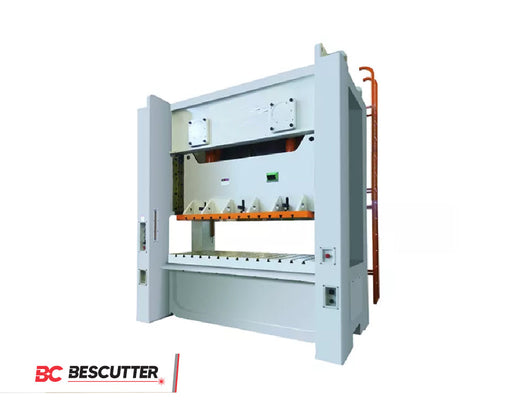


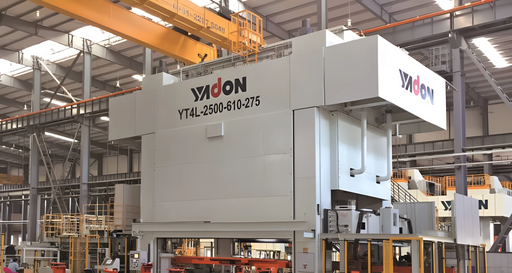


Mechanical stamping presses represent the standard of efficiency in the modern metalworking industry. Designed to convert the rotational energy of a flywheel into a linear impact force, these machines offer the optimal combination of speed, tonnage, and cost-effectiveness. They are the superior technical choice for continuous manufacturing operations such as blanking, punching, stamping, and light drawing in high volumes.
Engineering and Operation of the Mechanical Press
Unlike hydraulic systems, the mechanical press relies on the accumulation of kinetic energy. The motor drives a flywheel which, through a high-torque clutch and brake system, transfers the motion to the crankshaft and connecting rod. This ensures that maximum force is delivered precisely at the point of contact (BDC), enabling fast and repetitive work cycles.
Competitive Advantages of Mechanical Drives
- High Production Speed (SPM): Capable of reaching hundreds of strokes per minute, they are unsurpassed in output for progressive or transfer dies.
- Energy Efficiency: The flywheel reduces peak electrical consumption compared to systems that require constant force throughout the entire range.
- Simplified Maintenance: Robust and straightforward mechanics facilitate diagnosis and reduce downtime for complex repairs.
Structure Types: C-Frame vs. Straight Side
The selection of the structure is critical for the accuracy of the part and the lifespan of the die.
C-Frame Presses (C-Frame / Gap Frame)
They are versatile and offer excellent access to the work area from three sides, facilitating die changes and the integration of manual or automatic feeders. They are ideal for:
- Small to medium-sized pieces.
- Workshops that require flexibility for different jobs (Job Shops).
- Light to medium tonnage operations (up to 250-300 tons).
Straight Side Presses
Designed with a closed box frame (double upright), they eliminate the angular deflection typical of C-frames. This structural rigidity is essential for:
- Progressive Dies: They maintain perfect parallelism of the slide, preventing premature wear of the punches.
- High Precision: They guarantee tight tolerances on complex parts.
- High Tonnages: Ideal for capacities exceeding 300 tons or materials with high mechanical resistance.
Critical Technical Specifications
Our range of mechanical die-cutting machines integrates advanced technologies to maximize safety and process control.
Clutch and Brake Systems (Wet Clutch)
We use pneumatic clutch and brake units, often in an oil bath (Wet Clutch). This dissipates heat efficiently, allows for high intermittent engagement rates without excessive wear, and significantly reduces operating noise, meeting modern environmental regulations.
Hydraulic Overload Protection (HOLP)
Protecting your investment is a priority. The HOLP (Hydraulic Overload Protection) system instantly detects any excess tonnage (e.g., double sheet feed) and releases hydraulic pressure from the slide in milliseconds, stopping the machine before structural damage or crankshaft breakage occurs.
High Precision Sliding Guides
To ensure part quality, the slide moves on long guides (6 or 8 points in advanced models) with automatic lubrication. This minimizes lateral play and ensures the die descends perfectly perpendicular, even under eccentric loads.
Industrial Applications and Materials
The robustness of our mechanical presses allows us to process a wide range of materials, from mild and galvanized steels to high-strength steels (HSLA), stainless steel, aluminum, copper, and brass. They are the core technology for sectors such as:
- Automotive Sector: Supports, clips, connectors and structural panels.
- White Goods and Air Conditioning (HVAC): Heat exchanger fins, motor housings and front panels.
- Electronics and Hardware: Electrical terminals, hinges and mass-produced fittings.
Automation and Peripherals
Although the core is mechanical, the operation is digital. Our presses are ready to be integrated into automated manufacturing cells through:
- PLC Control Interface: HMI touchscreens for production monitoring, batch counters and electronic cam management.
- Synchronization with Feeders: Dedicated ports for connecting servo feeders, straighteners and unwinders, creating turnkey stamping lines.
Technical Note: For applications requiring programmable speed curve control or pressure holding at bottom dead center, we recommend exploring our Servo Die Cutting Presses category.