

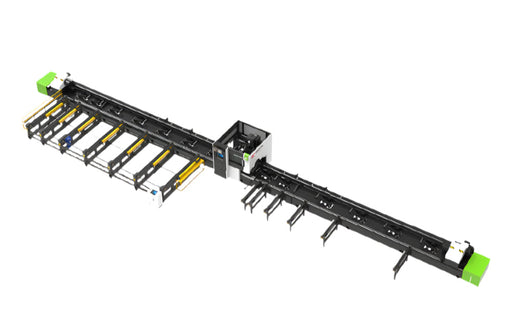


Laser tube cutting machines are advanced tools used in metallurgy to make precise cuts in metal tubes. These machines, using laser technology, optimize processes and improve production quality. There are different types of lasers, such as fiber and CO2 lasers, adapting to various materials and thicknesses. Their operation relies on key components that enable efficient and clean cutting, essential in several industries.
Main features of laser tube cutting machines
Laser tube cutting machines are distinguished by their precision and versatility . These characteristics are key to adapting to diverse needs in the metalworking industry.
Technical specifications and cutting capabilities
Technical specifications are fundamental to determining the effectiveness of these machines in different work environments. Cutting capacities vary depending on the model and the technology used.
Compatible material types and thicknesses
There are various material options that the machines can cut. Some of the most common include:
- Stainless steel
- Aluminum
- Copper
- Ferrous and non-ferrous metals
Regarding thicknesses, they can handle materials ranging from thin to several centimeters thick, depending on the specific equipment.
Maximum dimensions of tubes and profiles
The dimensions these machines can handle are variable. Generally, they offer the ability to cut tubes of different diameters and lengths , adapting to the needs of the project.
Laser technologies used in tube cutting
These technologies keep them at the forefront of modern cutting. Each type of laser has its specific purpose and benefits.
Fiber laser: advantages and applications
Fiber lasers have become a popular choice due to their high efficiency . This type of laser allows for fast and precise cuts , making it ideal for metallic materials. Its low maintenance requirements are another factor that enhances its appeal in the industry.
CO2 laser and its function in cutting materials
The CO2 laser is versatile and primarily used for cutting non-metallic materials , although it is also effective for certain metals. It operates efficiently, but consumes more energy compared to other technologies.
Solid-state lasers in specialized applications
Less common in the field of tube cutting, solid-state lasers find their place in specific applications where highly detailed cuts are required. This type offers a valuable alternative in situations demanding high precision and control.
Operation and key components of the laser tube cutter
The operation of a laser tube cutter relies on advanced technologies and essential components that guarantee precise, high-quality cuts. Each part of the system plays a fundamental role in creating effective results.
Laser source and focusing system
The laser source is the core of the cutting process. It generates a concentrated laser beam used to heat the material. The focusing system , on the other hand, is responsible for precisely directing the beam using special lenses. This focusing maximizes the laser's energy in a small area, facilitating clean and precise cuts .
CNC systems and programming for custom cutting
CNC (Computer Numerical Control) systems allow for customized cuts according to design specifications. These controllers are vital for maintaining process repeatability and quality.
CNC software: control and customization
The CNC software acts as the interface between the user and the machine. It allows for programming cuts, adjusting parameters, and monitoring the process in real time. Customization becomes simple through this tool, offering flexibility in cutting tasks.
Automation and motion systems
Automation facilitates the movement of the tube within the machine. Motion systems are critical to ensuring precise cuts in different directions, increasing the overall process efficiency .
Gas extraction and handling system during cutting
During laser cutting, gases and smoke are generated that must be effectively removed. The extraction system cleans the work environment, preventing overheating of the material and improving visibility of the cutting process.
Complementary equipment: pneumatic loaders and auxiliary systems
Pneumatic loaders are used to facilitate the loading and unloading of pipes, optimizing cycle time. These complementary systems, along with other auxiliary equipment, help increase the efficiency and continuity of the production process.
Industrial applications of laser tube cutting machines
Laser tube cutting machines have found a prominent place in various industries, thanks to their ability to make precise and efficient cuts . Their versatility allows them to adapt to different production processes.
Use in the automotive industry and manufacturing of industrial vehicles
In the automotive industry , these machines are essential for manufacturing structural components . Their ability to cut steel tubes and other metals speeds up the production of parts needed for cars and commercial vehicles.
Construction and fabrication of metal structures
The construction sector benefits enormously from laser cutting. This technology is used in the manufacture of metal structures, where high-precision cuts are required.
Cutting of tubes and profiles for frames
Cutting profiles and tubes is essential for creating robust frames . Clean, well-defined cuts ensure that the pieces fit perfectly into their respective structures.
Integration with bending and laser welding machines
Compatibility with other machines, such as bending and laser welding machines , allows for an efficient workflow , optimizing time and reducing material waste in production.
Furniture and decorative products industry
Furniture factories have begun adopting these cutting machines to produce decorative and functional metal pieces . This allows for customization and high-quality finishes , enabling the creation of unique, made-to-measure designs.
Applications in industrial equipment and heavy machinery
In the heavy machinery industry, laser cutting contributes to the manufacture of components that require rigorous quality control and precision , such as cranes and platforms. Each part must meet the most demanding industrial specifications.
Other business areas and emerging sectors
The versatility of laser tube cutting machines opens up opportunities in emerging sectors. New areas, such as renewable energy and the manufacture of electrical components , are beginning to explore this technology to improve their production processes.
Benefits and competitive advantages of laser cutting in tubes
The use of laser technology in tube cutting offers numerous benefits and advantages that optimize production processes. These qualities allow companies to remain competitive in a constantly evolving market.
Precision and quality in surface finishes
Laser cutting stands out for providing an exceptional level of precision , ensuring clean and defined finishes . This is vital for applications where tolerances are tight and the quality of the final product is paramount.
Waste minimization and materials optimization
Thanks to the high precision of the cutting, material is used more efficiently. The reduction in waste not only helps to save costs, but also contributes to a more sustainable production process.
Reduction of subsequent finishing processes
The quality of laser cutting significantly reduces the need for post-processing, such as polishing or additional machining . This not only saves time but also reduces labor and material costs.
Increased speed and efficiency of production
Laser cutters are capable of operating at high speeds , which improves the overall efficiency of the manufacturing process. This allows companies to meet demanding deadlines and adapt quickly to market demands.
Flexibility for custom designs and complex parts
Laser technology allows for the creation of intricate and customized cuts , making it ideal for productions that require unique pieces or specific designs. This customization capability expands the possibilities for product innovation.
Impact on the reduction of operating and maintenance costs
Implementing laser cutting machines can lead to a significant decrease in long-term operating costs . Their robust and efficient design, along with the reduced need for frequent maintenance, optimizes overall company spending.
Options and criteria for choosing a laser tube cutting machine
When considering the purchase of a laser tube cutter, it is essential to evaluate various options and criteria that suit the specific needs of each industry.
Comparison between fiber, CO2 and solid state machines
There are different types of laser technologies that can be used for tube cutting, each with distinct characteristics and benefits:
- Fiber machines: Highly efficient on metals such as stainless steel and aluminum, they offer reduced energy consumption and high cutting speed.
- CO2 machines: They are versatile for non-metallic materials, but their performance on metals is lower compared to fiber machines.
- Solid state machines: Less common in the tube industry, they are useful for applications that require high precision in specific cuts.
Key factors: power, size, and type of cut
The selection of a machine depends largely on several key factors:
- Power: Determines the cutting capacity and speed of the process. Higher power allows for deeper and faster cuts.
- Size: The machine's dimensions must be adjusted to the available space in the workshop and the operating requirements.
- Type of cut: Considering the complexity of the shapes and the thickness of the tubes to be cut is essential to choosing the right equipment.
Technical support, assistance and after-sales services
The provider's support is a crucial aspect when making your selection. It's important to verify the quality of the support and services offered, which should include:
- Training and maintenance: Training in the use of machinery optimizes its operation and prolongs its useful life.
- Guarantees: They ensure confidence in the equipment purchased and may include various financing conditions to facilitate the purchase.
Importance of training and maintenance service
Good training increases operator efficiency and helps prevent common errors during machine use. Ongoing support reduces downtime .
Guarantees and financing conditions
Analyzing the terms of the guarantees , as well as the financing options, allows for better investment planning and ensures coverage against possible failures.
Programming and software to optimize laser tube cutting
Programming and software are key elements for maximizing efficiency and precision in laser tube cutting. With advanced CNC systems, detailed control over each cutting operation is achieved.
Characteristics of applied CNC systems
CNC (Computer Numerical Control) systems are designed to offer precise control of the cutting machine. Some relevant features include:
- Precise control of every movement of the cutting head.
- Easy programming for different geometries and designs.
- Ability to execute complex commands in real time.
- Support for multiple design file formats .
Integration with other CNC machines: bending and welding machines
Integrating CNC systems further improves the efficiency of production lines. Combining laser cutters with bending and welding machines simplifies processes such as:
- Production of parts that require cutting and bending in a single operation.
- Reduction of handling time between different processes.
- Optimizing the workflow in the workshop.
Downloadable files and vectors for custom cutting programs
The use of downloadable files and vectors is essential for customizing cutting software. These allow you to create designs tailored to the needs of each project. The most common file types include:
- DXF (Design Interchangeable Format).
- SVG (Scalable Vector Graphics).
- AI (Adobe Artificial Intelligence).
Software updates and continuous improvement
Constant software updates are essential to maintaining competitiveness in the market. Software improvements may include:
- New features based on user feedback.
- User interface improvements to simplify handling.
- Security and performance updates to prevent failures.
Trends and growth of the tube cutting machine market in Mexico
The market for laser tube cutting machines in Mexico has experienced remarkable growth in recent years, influenced by the adoption of advanced technology and the diversity of applications in different industrial sectors.
Technological innovations in laser equipment for metal
Innovations in laser equipment have revolutionized the way tube cutting is performed. The latest machines incorporate fiber laser technology , which improves efficiency and reduces operating costs. Other innovations include automation systems and advanced software for precise control of the cutting process, allowing for a greater level of customization in production.
Demand and needs of the Mexican industrial sectors
The growing demand for customized solutions in the automotive, construction, and furniture industries has driven the need for more advanced tube cutting machines. Increasingly, companies are seeking to optimize their production processes to meet market demands. This phenomenon has generated considerable interest in upgrading and acquiring laser technology.
Strategies to boost productivity in manufacturing
- Implementation of preventive maintenance practices.
- Ongoing staff training in the use of laser technologies.
- Integration of automated systems that improve workflow efficiency.
- Process evaluation to identify opportunities for improvement.
Success stories and experiences with national clients
Several companies in Mexico have reported significant productivity improvements after adopting laser tube cutting machines. These cases illustrate how the technology has enabled them to increase product quality and reduce delivery times, resulting in a competitive advantage in the market. The experience gained from these projects has fostered an environment of collaboration and continuous learning between technology providers and their clients.